

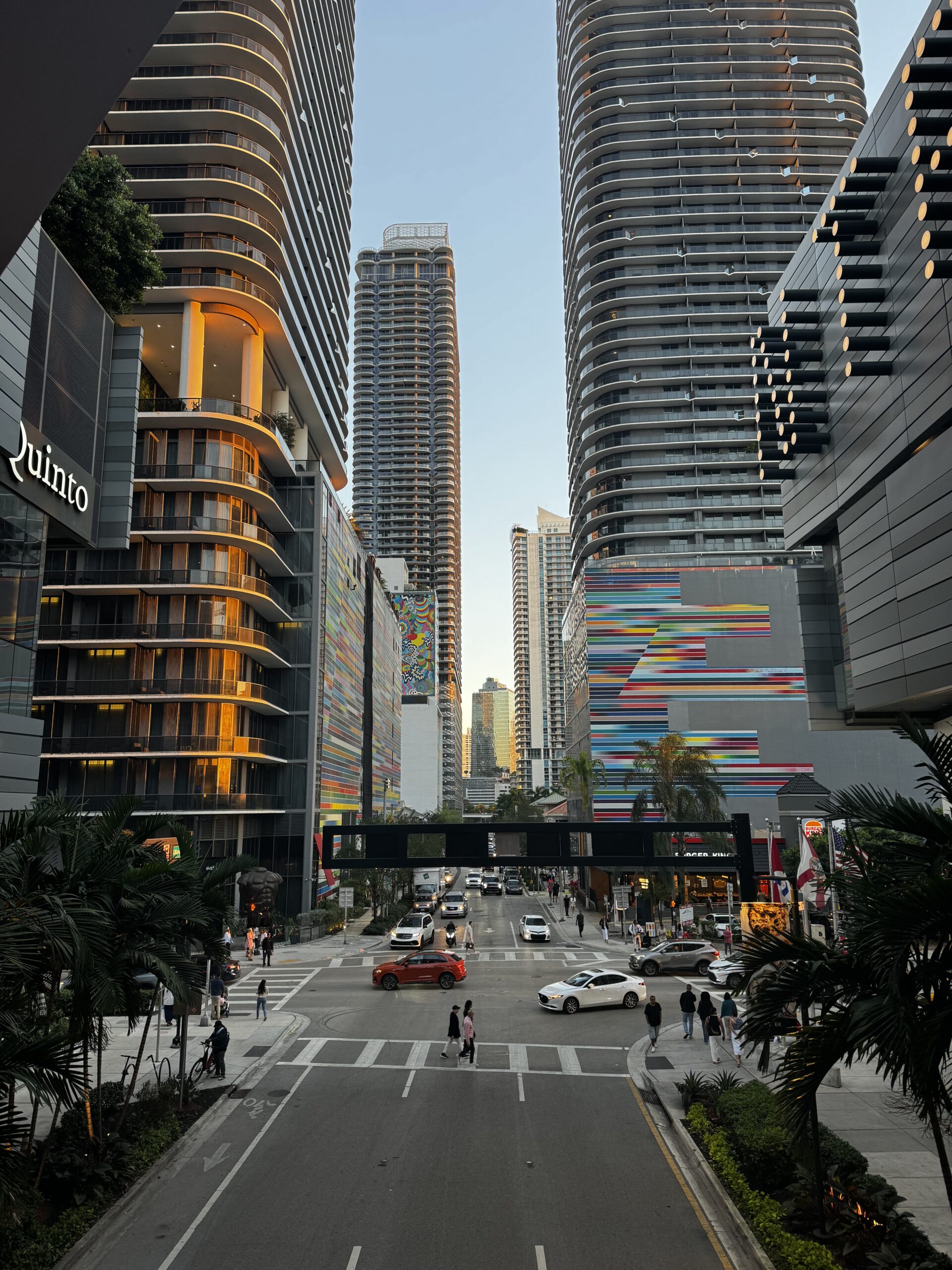
Brickell is often described as a single neighborhood, but from an investment perspective, it functions as a series of overlapping micro markets, each with distinct demand drivers, liquidity conditions, and risk profiles. Treating it as a uniform environment leads to mispricing risk and misunderstanding performance.
At one end of the spectrum are newly delivered luxury developments, often branded and marketed internationally. These assets attract a global buyer base, including high net worth individuals seeking lifestyle positioning as much as financial return. Demand in this segment is influenced by brand recognition, design, and macro factors such as currency strength and international mobility.
Alongside this segment exists a concentration of buildings that allow short term rentals, which have become a focal point for yield driven investors. These properties operate under a different logic, where performance is tied not only to long term market fundamentals but to tourism cycles, platform regulation, and operational efficiency. Income volatility in this segment is inherently higher, and its sensitivity to external shocks is more pronounced.
A third layer consists of older inventory, often priced at a discount relative to newer developments but offering different forms of opportunity. In some cases, these buildings provide entry points for buyers seeking location over product, while in others they present repositioning potential, contingent on building condition, financial health, and future capital requirements.
What complicates the picture is that these segments coexist within close proximity, sometimes within the same street. Two buildings separated by a few blocks can have entirely different liquidity profiles and buyer pools. One may experience strong demand and limited resale competition, while another may face saturation and extended time on market.
This fragmentation becomes particularly relevant in changing economic conditions. As interest rates rise or as cost structures increase, segments reliant on investor demand or short term rental income may experience greater pressure, while those supported by end user demand or limited supply may demonstrate relative resilience.
Understanding Brickell, therefore, requires moving beyond its geographic boundaries and analyzing its internal composition. The question is not whether to invest in Brickell, but which layer of Brickell aligns with a specific investment strategy, risk tolerance, and time horizon.