

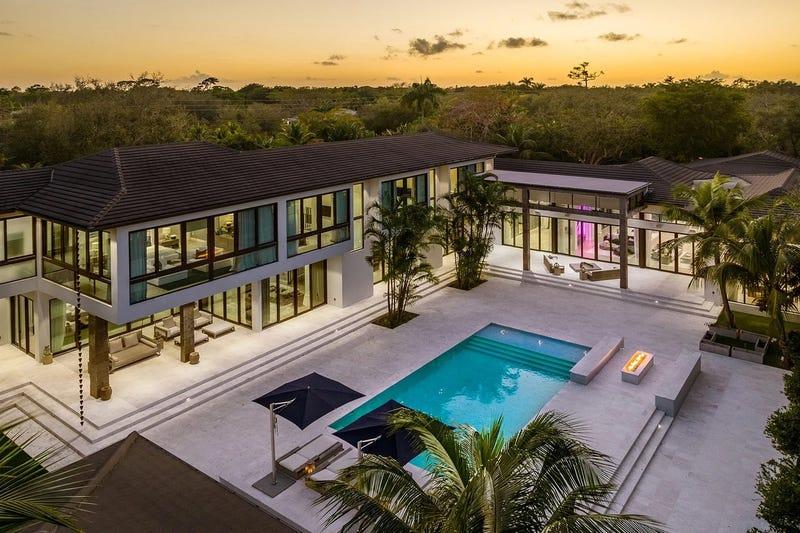
Miami’s long-term real estate value is anchored to an unyielding geographical reality: the city is physically landlocked by the Atlantic Ocean and the protected Everglades, creating a finite supply of continental soil. In core mainland submarkets like Coral Gables, Coconut Grove, Ponce Davis, and Pinecrest, this spatial constraint has triggered an institutional infill boom, where premium land has effectively become more valuable than the structures sitting on it. Over the past five years, values in these specific enclaves have surged dramatically, showing unprecedented appreciation across the board. This growth is heavily insulated from speculative macro shocks because these areas are heavily dominated by permanent end-users rather than transient investors or short-term operators.
The investment thesis in these high-scarcity pockets has completely shifted toward a strategy of demolition arbitrage. Institutional spec developers and ultra-high-net-worth families are systematically purchasing older, mid-century homes with the sole intent of tearing them down to unlock the raw earth beneath. At this level, underwriting ignores traditional room counts or cosmetic finishes, focusing instead on structural lot metrics: wide-frontage waterfront access, premium lot orientation, and total square footage exceeding critical estate thresholds. This land-grab is further accelerated by a continuous influx of domestic and international wealth seeking permanent relocation to jurisdictions that offer safety, political stability, and proximity to elite private educational institutions.
This continuous demand from permanent residents creates an insulation effect for these submarkets. Because the incoming buyer profile consists of corporate executives, fund managers, and family offices looking for primary residences, these neighborhoods are entirely free from the volatility associated with investor-heavy condo markets or short-term rental buildings. Furthermore, the future supply pipeline in these elite areas is virtually non-existent due to strict zoning protections and the physical absence of vacant land. This structural imbalance ensures that the cost of land acts as a highly resilient floor for the market. For the long-term preservation of capital, the play has moved entirely away from buying generic luxury products toward acquiring the underlying land in these elite, high-barrier-to-entry residential micro-markets.
The mechanics of this demolition arbitrage require a sophisticated understanding of localized construction timelines and carrying costs. A developer purchasing a teardown property must factor in months of permitting delays, municipal reviews, and environmental assessments before a single shovel touches the ground. During this pre-construction phase, the asset produces zero income while consuming capital through property taxes and liability insurance. Therefore, the financial margin on these plays must be substantial, requiring an exit product that commands top-tier pricing upon completion.
Architectural trends in these infill projects have also shifted toward high-security, resilient design paradigms that cater to the exact demands of modern affluent buyers. New builds maximize allowable square footage under local zoning codes, incorporating advanced home automation, commercial-grade impact windows, and elevated foundations designed to mitigate long-term environmental risks. These features create a massive product mismatch when compared to the existing legacy housing stock, further driving the desirability of new constructions. The market is effectively paying a premium not just for the location, but for modern engineering that meets the highest standards of safety and luxury.
Furthermore, the lack of available land has forced developers to get creative with assemblage strategies, occasionally buying adjacent underutilized parcels to create larger, cohesive luxury estates. This compounding of lots creates an exponential lift in value, as true estate-sized parcels are the rarest commodity in mainland Miami. The entities executing these assemblages are typically backed by institutional private equity or multi-family offices with the capital runway to endure extended development timelines. This institutional backing adds a layer of structural stability to the neighborhood, preventing distressed sell-offs during broader economic slowdowns.
For the private investor, the entry barriers to these high-scarcity pockets have never been higher, transforming them into exclusive sandboxes for elite capital. The combination of structural supply shortages, permanent end-user dominance, and institutional development standards makes these mainland enclaves the safest bet for capital preservation in South Florida. While other sectors of the real estate market face cyclical headwinds, the fundamental value of premium continental earth in Miami remains completely unchallenged. Success in this space is no longer about finding a bargain; it is about securing a piece of an irreplaceable geographic footprint.