

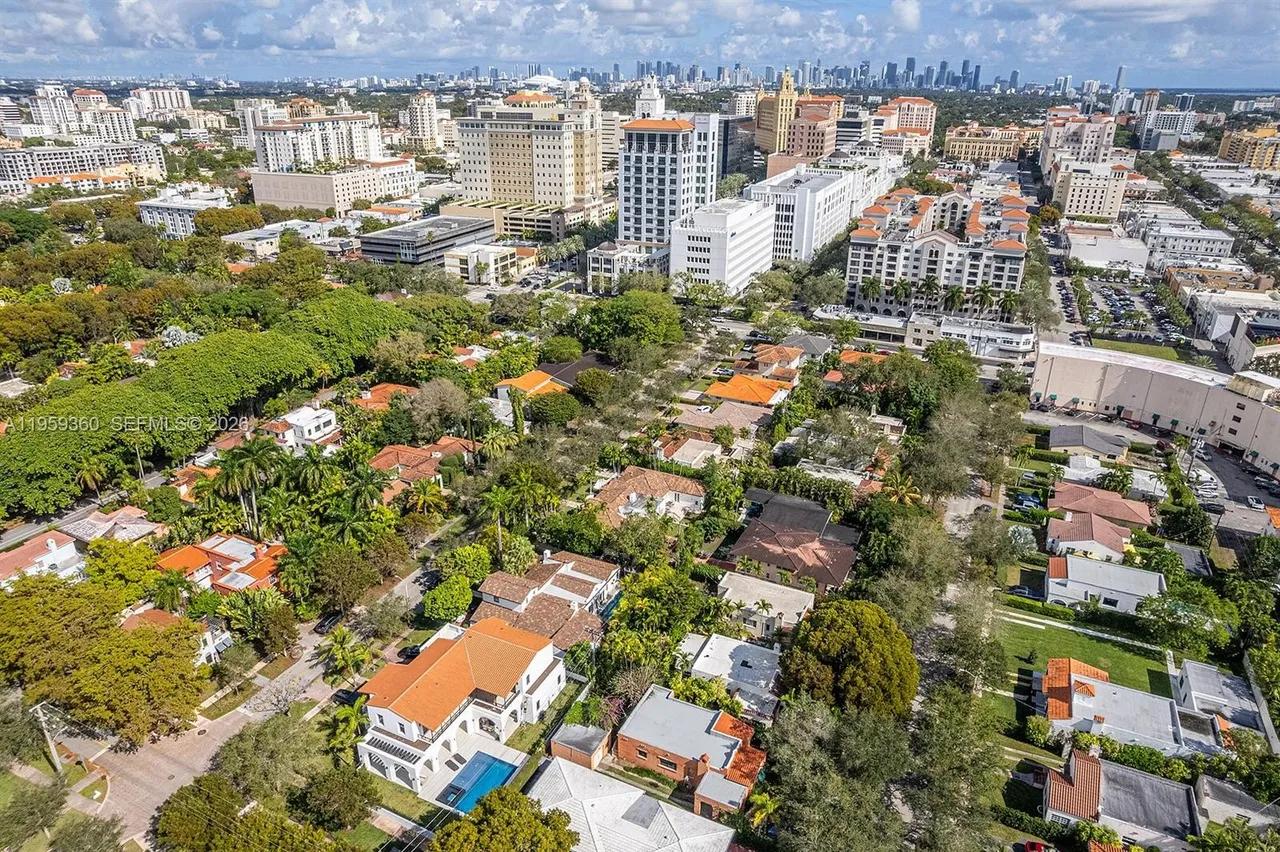
Mainland residential enclaves offer a clear view of the deep behavioral divide between legacy property owners and institutional capital. A microscopic examination of historical mainland communities reveals a consistent structural theme: inventory remains tightly constrained because fewer homeowners are willing to relinquish their low-rate mortgages, but the buyers who are active refuse to overpay for unrenovated or improperly priced assets. In highly coveted submarkets, the average closed home price has stabilized at a historically high baseline, with buyers showing a willingness to pay premium rates per square foot only for pristine properties. In stark contrast, the average active listing price in these same neighborhoods has ballooned significantly higher, with current sellers demanding an aspirational premium that the market is actively resisting.
This variance represents a massive pricing gap that sellers are attempting to extract from incoming capital. This bid-ask spread exposes the core tension dictating transaction volume: while low inventory structurally protects sellers from sudden price capitulation, buyers are demonstrating extraordinary patience, anchoring their offers strictly to recent closed sales rather than forward-looking expectations. The direct consequence of this standoff is a dramatic extension in marketing times across the mainland. While properties that are correctly aligned with the market close within a reasonable timeframe, the average days on market for active listings has stretched out significantly. This mathematical gap confirms that the primary risk confronting the mainland market is not a deficiency in baseline demand, but rather the pervasive threat of overpricing against hard market evidence.
This analytical reality is further reinforced by the fact that the average negotiation discount remains highly stable below original asking prices. This consistency proves that even within highly desirable mainland communities, buyers retain significant negotiating leverage and are entirely comfortable walking away from transactions that do not match the valuation floor established by recent comparable sales. The current environment rewards strategic, conservative positioning rather than speculative optimism. Sellers who fail to recognize this shift find their properties lingering indefinitely on the market, accumulating a market stigma that eventually forces deeper, more reactive price cuts down the line. For the investor looking to deploy capital on the mainland, the extended time on market for active listings provides a valuable tool to negotiate favorable entry points on structurally sound assets.
The psychological component of this bid-ask disconnect cannot be understated, as many sellers remain mentally anchored to the anomalous peak pricing of recent years. They view their neighbors’ past successes as a guaranteed baseline for their own listings, ignoring the fact that carrying costs and financing realities have fundamentally shifted for the incoming buyer pool. This cognitive bias creates an artificial floor on asking prices that slows down market velocity and reduces overall transaction liquidity. Savvy buyers are capitalizing on this stagnation by tracking listing age and targeting properties where seller fatigue has begun to set in.
Concurrently, the cost of property capital has forced buyers to become hyper-analytical regarding the physical condition of mainland assets. With renovation and construction costs remaining elevated due to labor shortages and material expenses, a house requiring significant updates is hit with a double valuation penalty. Buyers are factoring the future cost of modernizing mechanical systems, replacing roofs, and upgrading structural elements directly into their initial offers. Consequently, turn-key, fully modernized homes continue to command a massive premium and sell quickly, while dated properties become the primary drivers of expanding inventory metrics.
This dynamic is creating a highly bifurcated mainland market where two distinct speeds of transactions exist simultaneously. On one hand, impeccably staged, perfectly priced homes clear the market in a matter of weeks, often attracting multiple clean offers from well-capitalized families. On the other hand, properties requiring work or launched with overly ambitious pricing strategies sit empty for months, dragging down neighborhood averages and skewing market data. Investors must possess the analytical tools to separate these two classes of assets when evaluating neighborhood trends.
In the long run, this bid-ask standoff will likely be resolved by a slow, orderly softening of seller expectations rather than a dramatic price correction. As carrying costs like property taxes and insurance premiums continue to tick upward, the financial burden of holding an overpriced, vacant asset will eventually compel sellers to accept market reality. Until that alignment occurs, capital patience will remain the most valuable asset in an investor’s portfolio. The current mainland market does not reward haste; it rewards the disciplined buyer who is willing to wait out the aspirational pricing cycle.